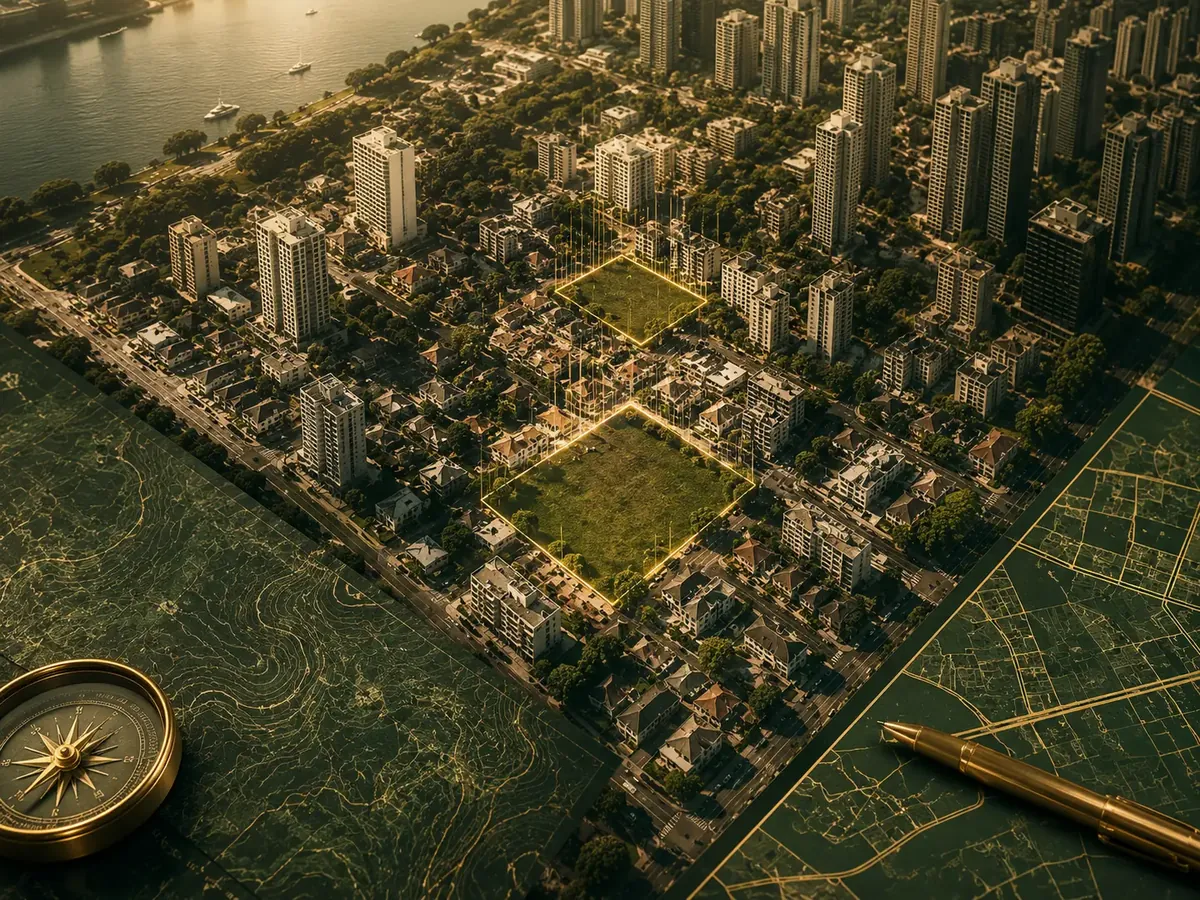
What is urban prospecting?
Urban prospecting is the structured search for land and properties that can be transformed into new developments. The work begins before the site visit: it requires reading the city, researching zoning, analyzing market behavior, and understanding the needs of owners and developers.
The goal isn’t to find just any available parcel, but to recognize a combination of factors capable of sustaining a healthy real estate deal.
The five essential readings of a site
- Urban zoning: zoning district, floor area ratio, height limits, setbacks, permitted uses, building-rights charges, and any environmental or heritage restrictions.
- Physical conditions: size, frontage, topography, lot shape, solar orientation, access, encumbrances, and the quality of the immediate surroundings.
- Documentation and ownership: the recorded title, chain of title, liens, probate matters, occupancies, existing contracts, and alignment among the owners.
- Market and product: real demand, buyer profile, prevailing prices, sales pace, competition, and product gaps.
- Timing of the negotiation: the owner’s expectations, form of payment, potential for a land swap, and compatibility with the developer’s strategy.
How to build a prospecting routine
Prospecting works best when it stops relying on chance. Define priority areas, log the sites you’ve analyzed, track regulatory changes, talk to local brokers, and keep a history of your approaches. A site that doesn’t close today may become viable after a change in price, zoning, or product strategy.
It’s also important to quickly separate a real opportunity from a site that only appears attractive. A strong address alone doesn’t make up for problematic documentation, an incompatible price, or a product with no demand.
Common mistakes
- Starting from the asking price without understanding the buildable potential.
- Confusing lot size with the area that can actually be sold.
- Ignoring the costs of demolition, remediation, building-rights charges, foundations, and infrastructure.
- Presenting a site to a developer without even the basic information organized.
- Treating prospecting as a one-off action rather than an ongoing process.
Want to turn prospecting into a method?
In the Real Estate Development Is an Art Mentorship, land analysis is worked through in a practical way — connecting zoning, market, product, feasibility, and negotiation.
Explore the mentorship